06 / 2024 / ROBOTICS · LEADERSHIP

FRC TEAM 2022
2024 SEASON
/ KRONOS

My senior-year FRC season as team captain, driver, and one of the main design contributors behind Kronos — a robot built to intake, amp, shoot, and climb in the 2024 FIRST Robotics Competition game.

TEAM FRC Team 2022 — Illinois Math and Science Academy
ROLE Team Captain / Design-Integration / Driver
ROBOT Kronos
FOCUS Robot Architecture,
CAD, Shooter Design,
Strategy, Integration
01

STUDENT-RUN FROM TOP TO BOTTOM

I joined Team 2022 after transferring to IMSA, which only has sophomore-through-senior students. By senior year, I had moved from the mechanical subteam to Design-Integration and was elected captain for the 2024 season.

Our team was entirely student-run. Beyond adults unlocking the lab and driving us to events, all knowledge, leadership, and technical coordination happened student-to-student.

02

THE 2024 GAME

The game centered around scoring foam rings in two ways: shooting them into the raised speaker or placing them into the amp. At the end of the match, robots could also hang on a chain for extra points.

Our goal was to build a machine that could do all three tasks while still being realistic for our team's resources, manufacturing ability, and timeline.

03

LEARNING BY DOING

In the first few days of build season, I spent three straight late nights creating a full robot concept called Boneshaker. It was essentially a crash course in large-scale robot assembly design and became our backup concept if our main direction fell through.

We never needed Boneshaker, but building it taught me how the full robot had to come together — and made me much more effective during our real design process.
04 / ROBOT ARCHITECTURE HOW KRONOS WORKED
01

PROTECTED INTAKE

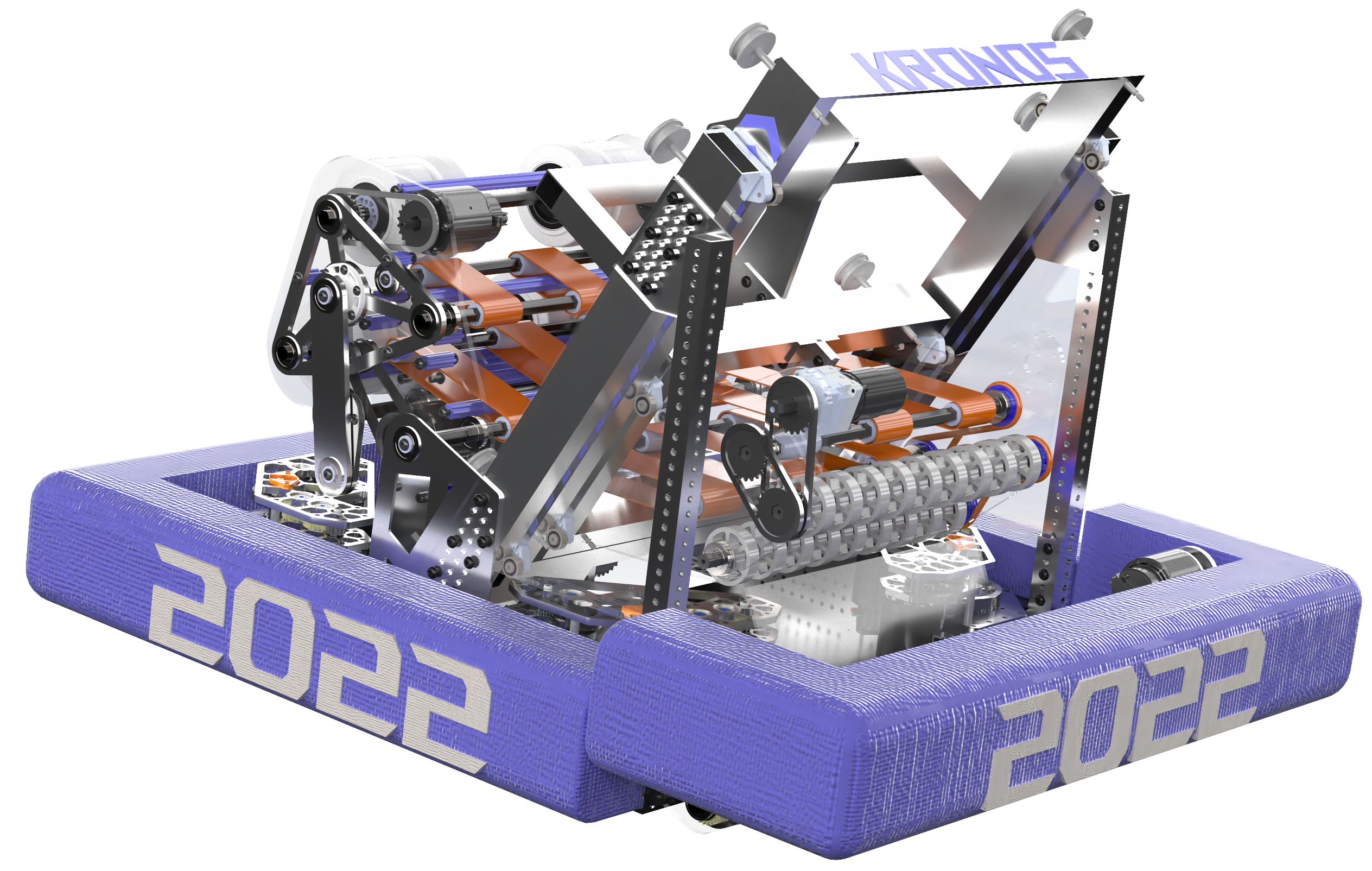
Kronos used a fixed under-the-bumper intake to collect notes from the floor. Because the intake remained protected by the bumper, we could drive aggressively into notes and other robots without worrying about an extending intake being the first thing to break.

02

INDEXER + AMP

Notes were transferred into a central indexer with compliant wheels on the top and bottom. That indexer sat in the middle of an angled elevator and could be raised to amp height, then run in reverse to outtake the note downward into the slot.

03

VARIABLE SHOOTER

To score in the speaker, the indexer fed the note into a variable-angle flywheel shooter. The shooter used a Limelight and AprilTags to automatically calculate the angle needed to score consistently from different positions on the field.

04

CLIMBING

The indexer also carried an aluminum hook on top so the robot could hoist itself onto the chain at the end of the match. That meant the structure above the robot had to serve both scoring and endgame functions.

05 / SHOOTER SUBSYSTEM MY MAIN DESIGN CONTRIBUTION

VARIABLE-ANGLE FLYWHEEL SHOOTER

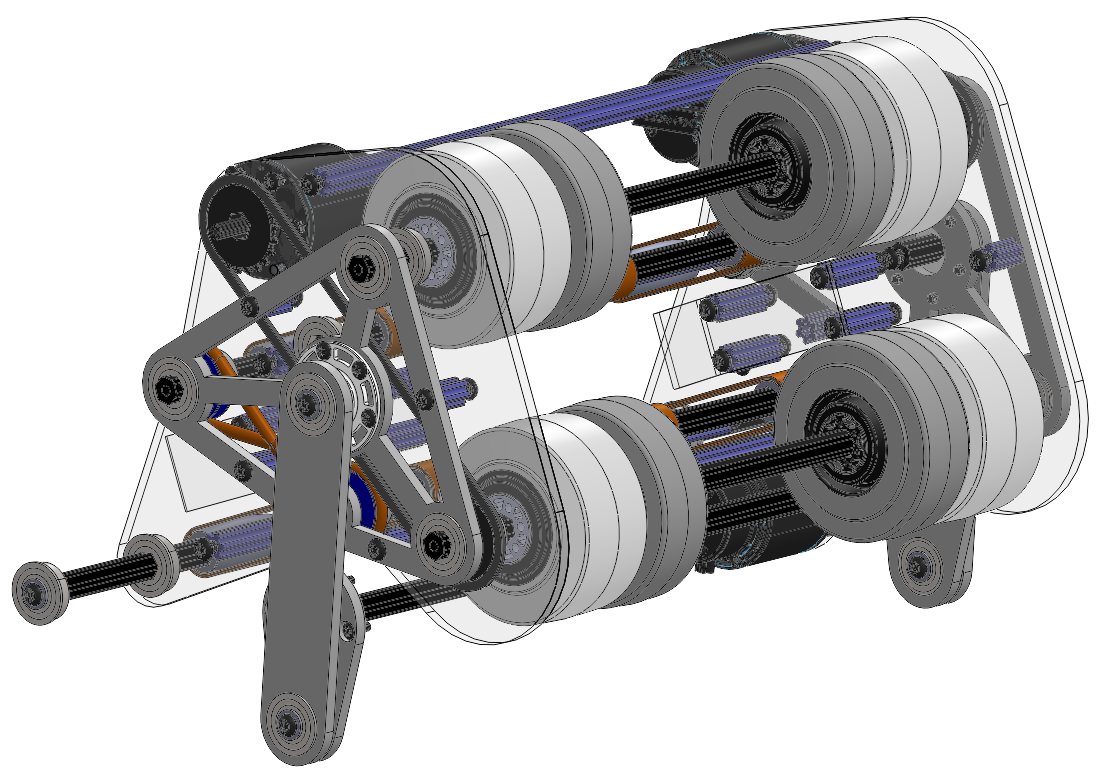
I essentially solo-designed the shooter subsystem. The assembly used a linkage mechanism to raise and lower the flywheel angle, allowing the robot to adapt to different shooting distances.

The flywheels were powered by two motors, with more wheels on one side to induce spin for stability in flight. The shooter itself used a combination of aluminum and polycarbonate side panels with bearings and shafts, while chain reduction transferred torque from the motors to the flywheel shafts.

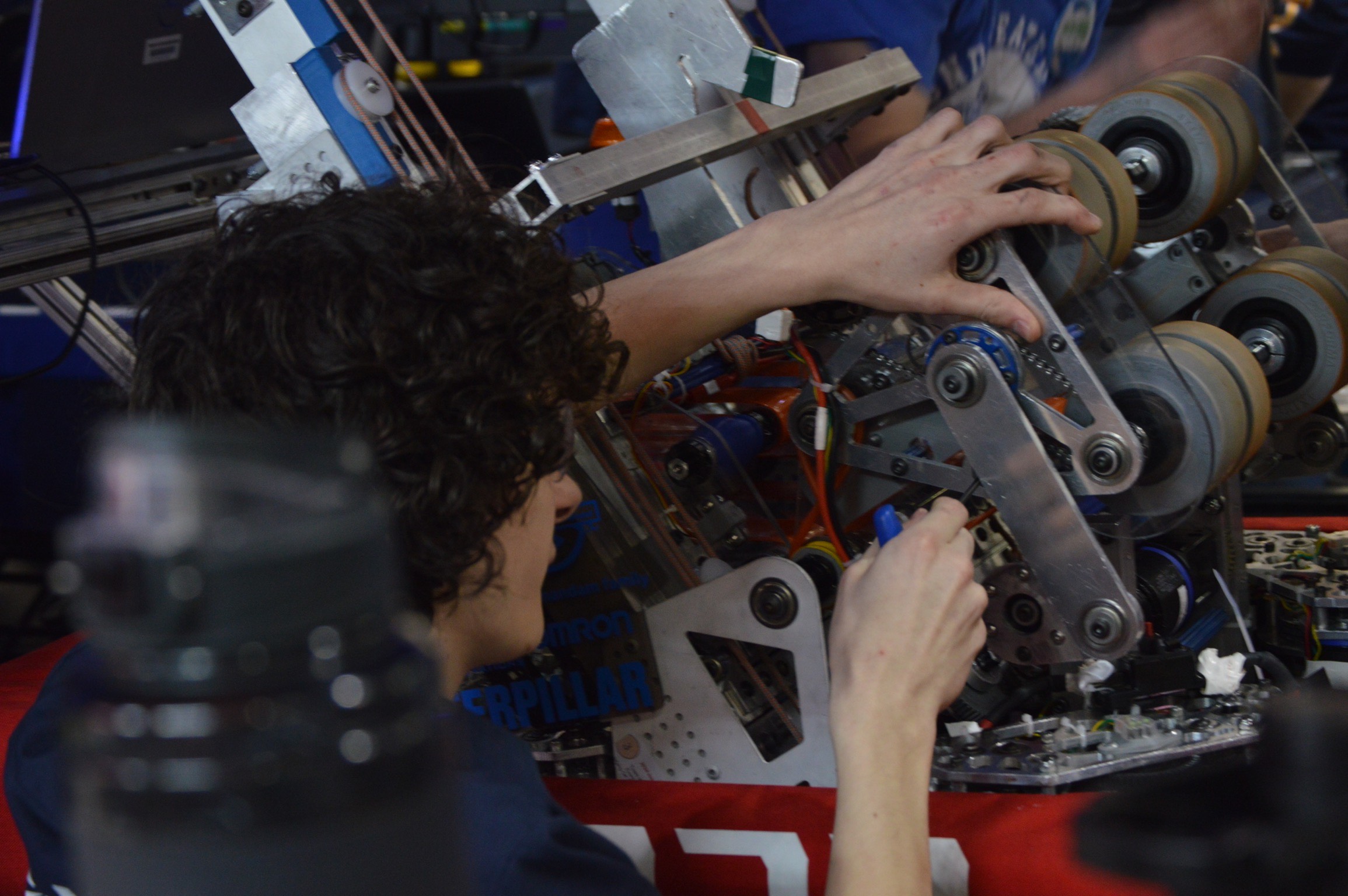
Like the rest of the robot, it was manufactured almost entirely in-house, largely from aluminum using our CNC mill. During competition, the shooter was also one of the systems I spent the most time maintaining and fine-tuning in the pit.

CAD of the variable-angle shooter subsystem
VARIABLE-ANGLE SHOOTER / CAD
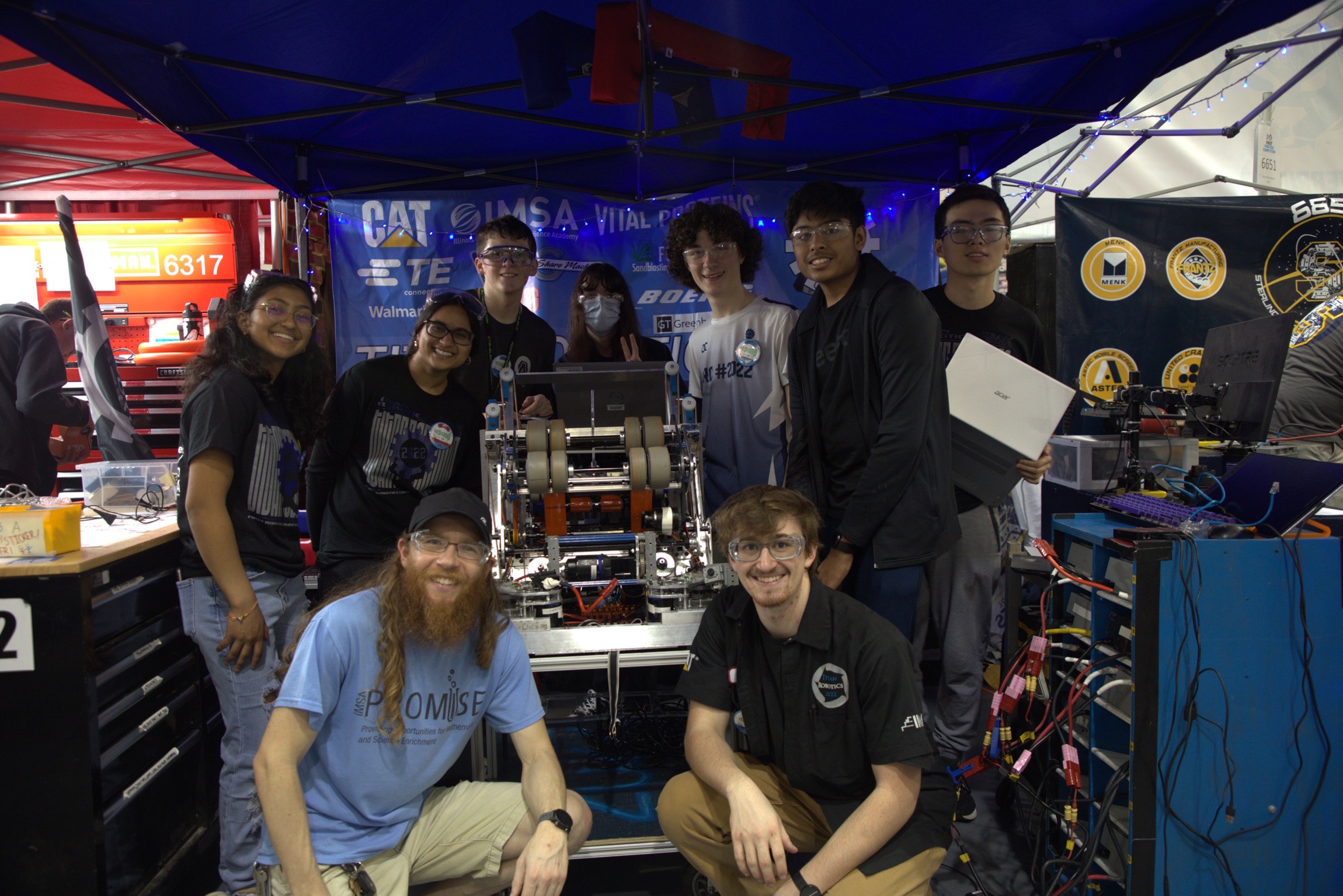
Nathan fixing the shooter in the pit at competition
IN THE PIT / FIXING THE SHOOTER
06 / CAD + CONCEPTS FINAL ROBOT + BACKUP PLAN
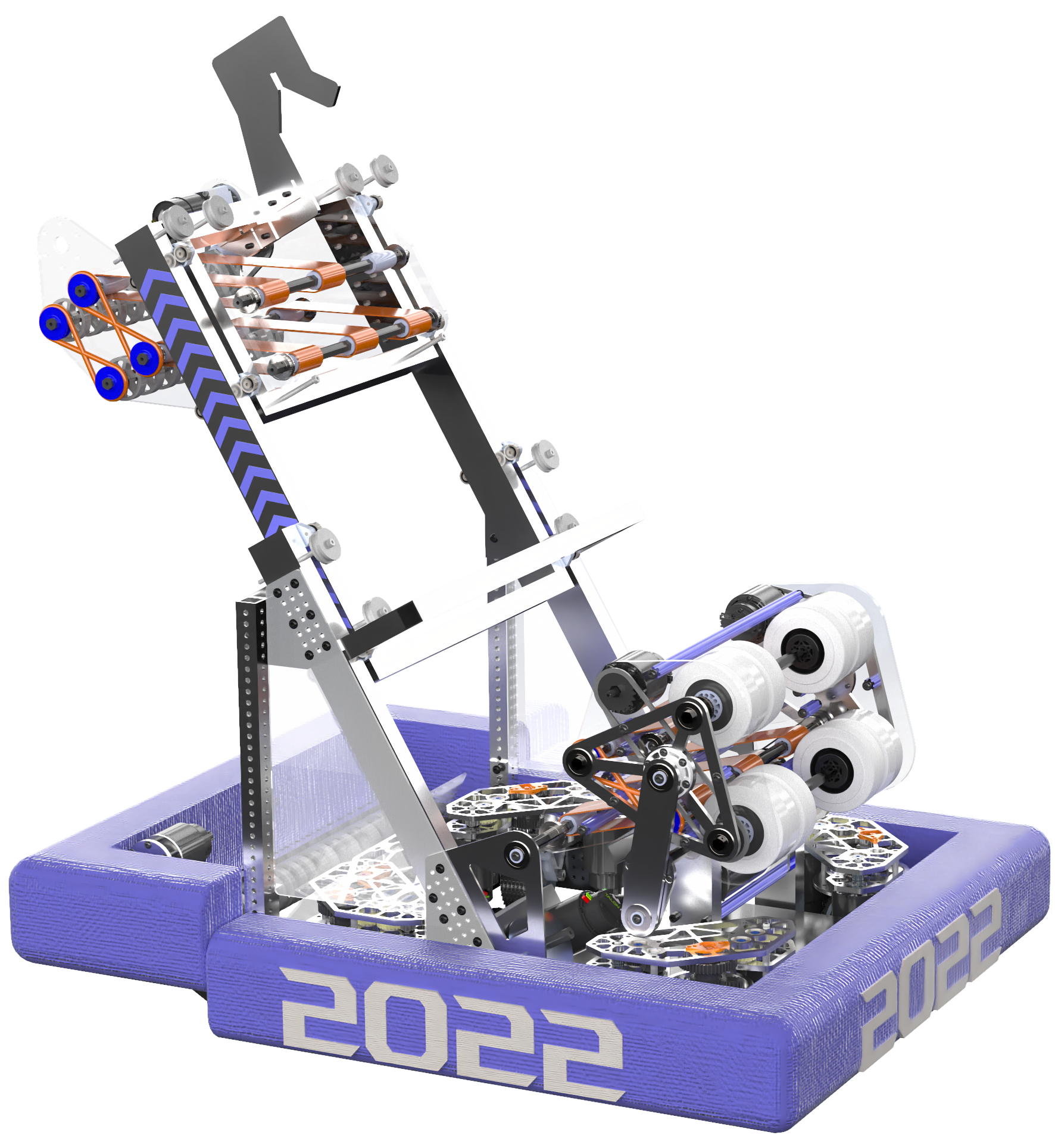
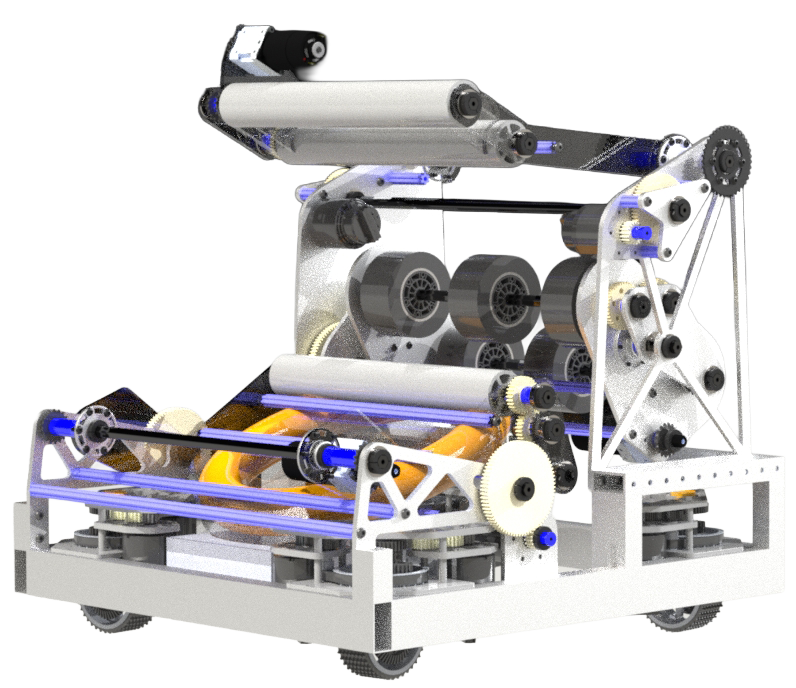
Render of Kronos with the elevator extended, showing the back corner
KRONOS / ELEVATOR EXTENDED + SHOOTER VISIBLE
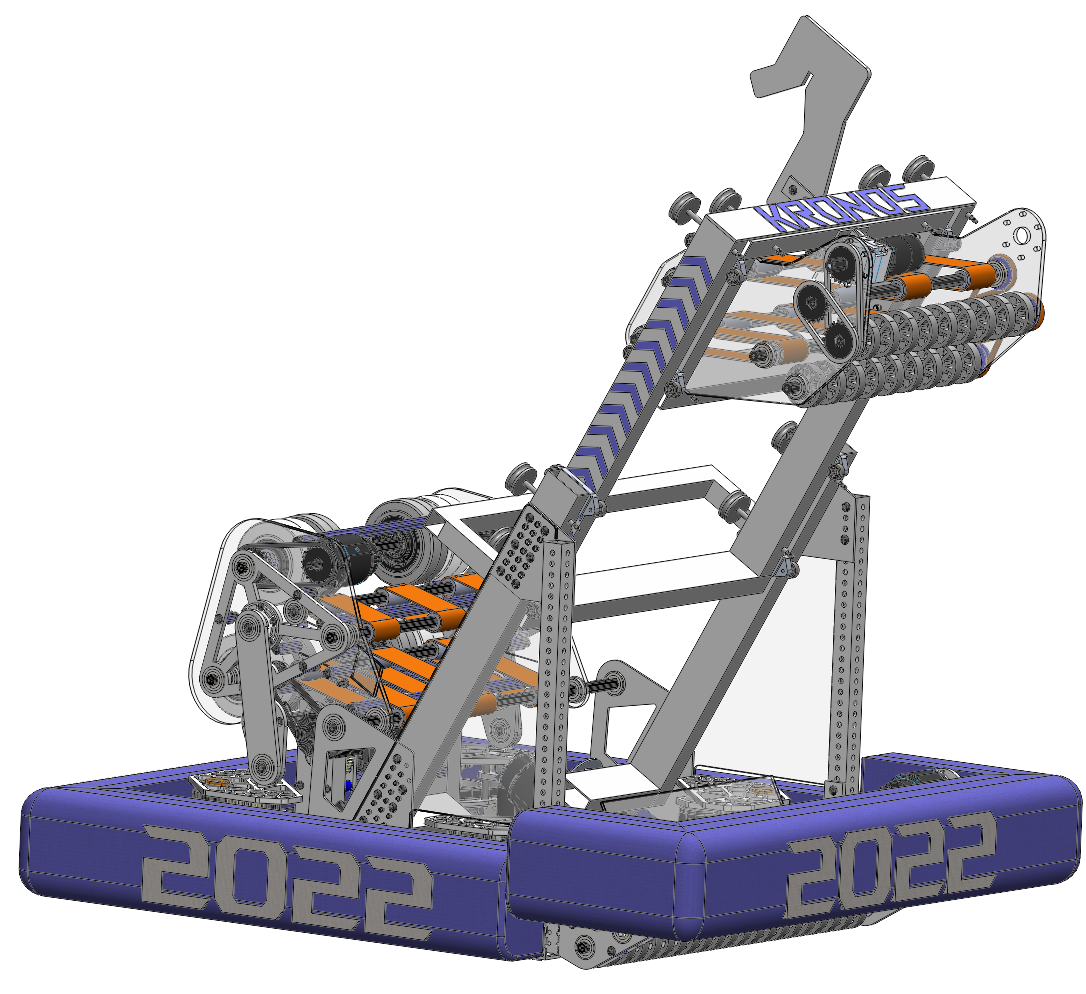
CAD of Kronos final assembly from the front corner
KRONOS / FINAL ASSEMBLY CAD
3D render of the Boneshaker concept robot
BONESHAKER / EARLY BACKUP CONCEPT
07 / COMPETITION + LEADERSHIP BUILDING THE ROBOT WAS ONLY HALF THE JOB

CAPTAIN, DRIVER, AND COORDINATOR

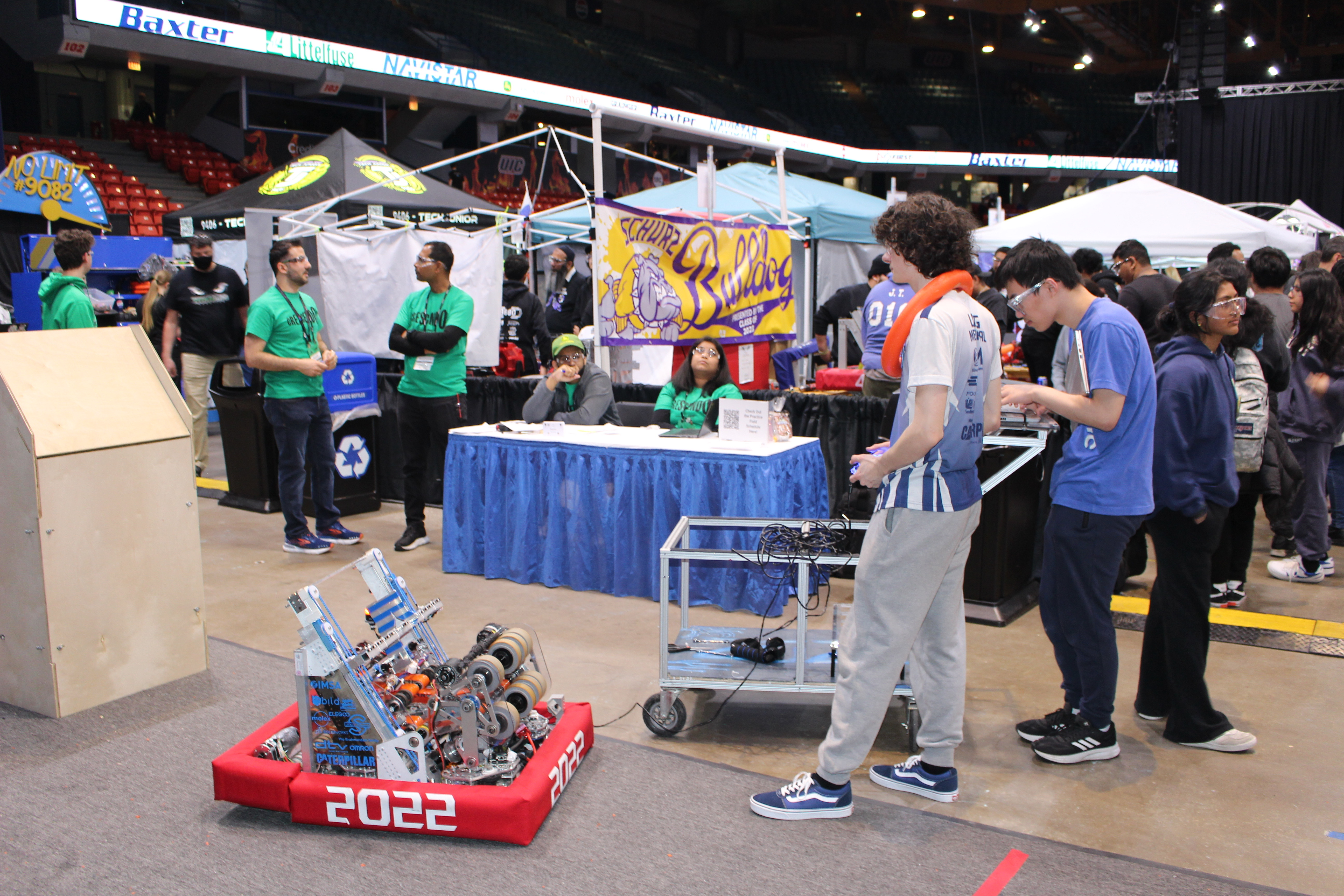
I was also the primary driver of the robot in competition, paired with a secondary driver who handled the shooter and intake/outtake functions. Driving Kronos gave me a completely different perspective on what worked and what needed to be refined under match pressure.

We attended two competitions. At the first, the code for the shooter was still being finalized, so we functioned mostly as an amp bot. By the second event, all of the systems were online, but mechanical issues still limited our consistency.

In our very last match, everything finally came together: intake, amp/speaker functionality, the shooter, and the climb all worked in the same match. It was the most rewarding single match of my three years on the team.

LEADING A TEAM OF 60

Team 2022 had around 60 students with specialists in design, manufacturing, wiring, programming, and operations. As captain, a huge part of my job was helping those different groups coordinate effectively during an extremely fast and stressful season.

That responsibility — more than any single part I designed — made the season the defining experience of my high school years. It taught me how much engineering success depends on communication, prioritization, and trust between people with very different skill sets.

It also gave me some of my closest friendships from high school, because the team worked through nearly every challenge together.