04 / ONGOING / ASSISTIVE · CAD

BLUELAB EASE
LUNCH TRAY
HOLDER

An assistive lunch-tray system for students who use walkers, designed with local physical therapists to make navigating the school lunch line more independent.

TEAMBLUElab EASE — Ann Arbor
ROLEAnn Arbor Subteam Co-Lead
STATUSFinal iteration in progress
SKILLSAssistive Design,
CAD, 3D Printing,
Prototyping, User Feedback
01

THE NEED

BLUElab EASE develops devices for children with disabilities. The Ann Arbor subteam works with physical therapists at local elementary schools to identify needs and test solutions for students who use assistive walkers and wheelchairs.

One recurring challenge was lunchtime. Students using walkers needed both hands to navigate, so a physical therapist often had to carry the student's lunch tray through the line.

02

THE GOAL

Our goal was to mount a tray directly to the walker so a student could move through the lunch line independently, carry a full lunch, and still operate the walker safely.

The design had to fit the existing walker without permanently modifying it, remain adjustable, and work within the routines already used by students and physical therapists.

03

MY ROLE

I joined EASE as a freshman and later became a co-lead of the Ann Arbor subteam. In addition to guiding the technical direction of the project, I helped with team-wide responsibilities including scheduling, applications, and communication with the College of Engineering.

My strongest contribution to the project was CAD-driven iteration: developing a new mounting strategy, designing the spring-handle clamp, and later helping redesign the system around feedback from the physical therapists and student using it.
04 / FIRST MAJOR REDESIGNSPRING HANDLE CLAMP
01

USING THE WALKER'S NATIVE MOUNTING SYSTEM

The biggest challenge was attaching the tray securely to the walker while keeping the device adjustable. I noticed that the walker manufacturer already used modular handles that clamped onto the frame.

I reverse engineered one of those first-party handles and designed a 3D printed socket that interfaces with the same mounting system. This made the tray highly adjustable in height, orientation, and location without changing the walker.

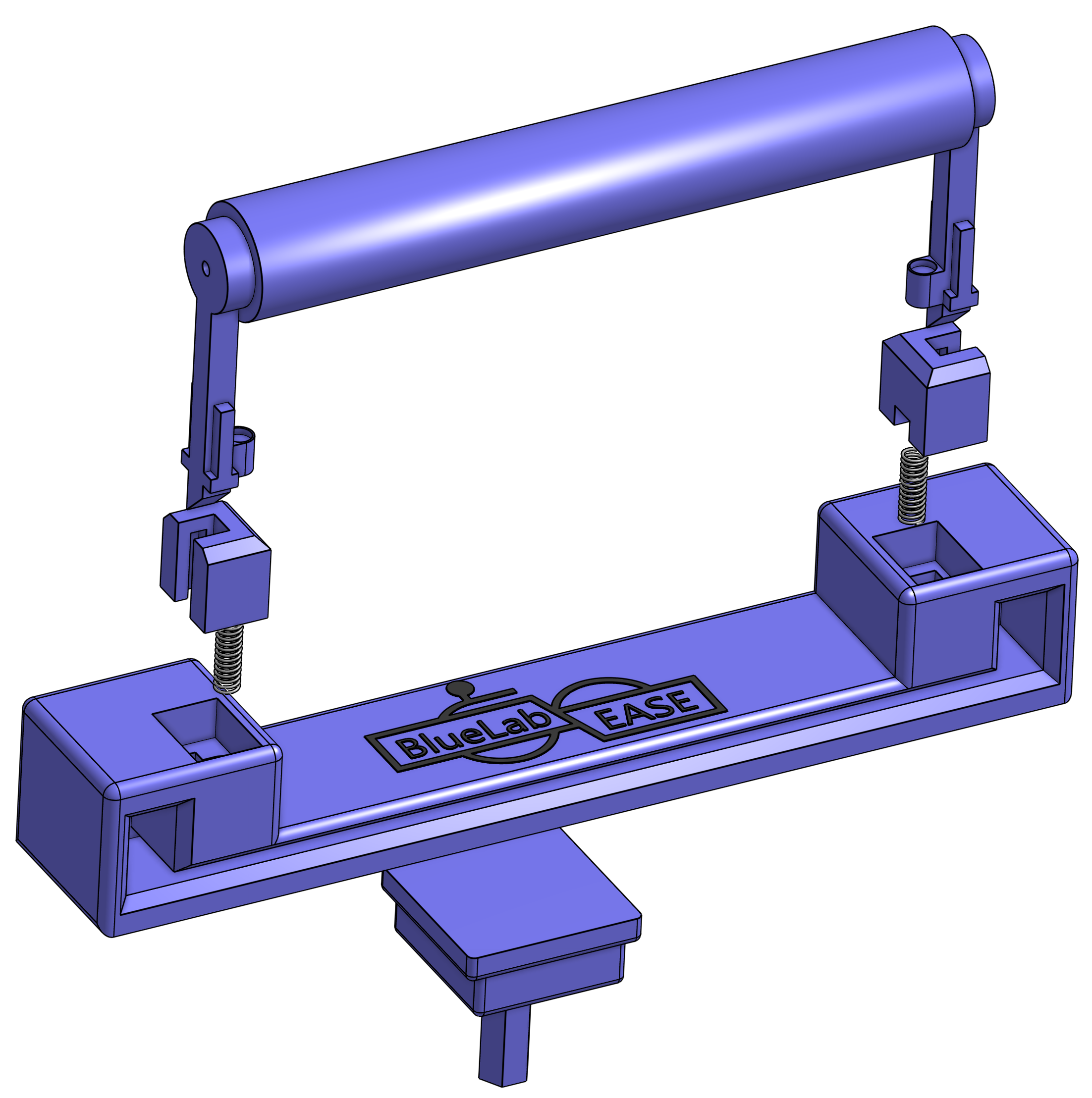
CAD rendering of the spring handle clamp
SPRING HANDLE CLAMP / CAD
Exploded CAD rendering showing the spring and handle mechanism
EXPLODED VIEW / SPRINGS + HANDLE SYSTEM
02

MAKING THE TRAY REMOVABLE

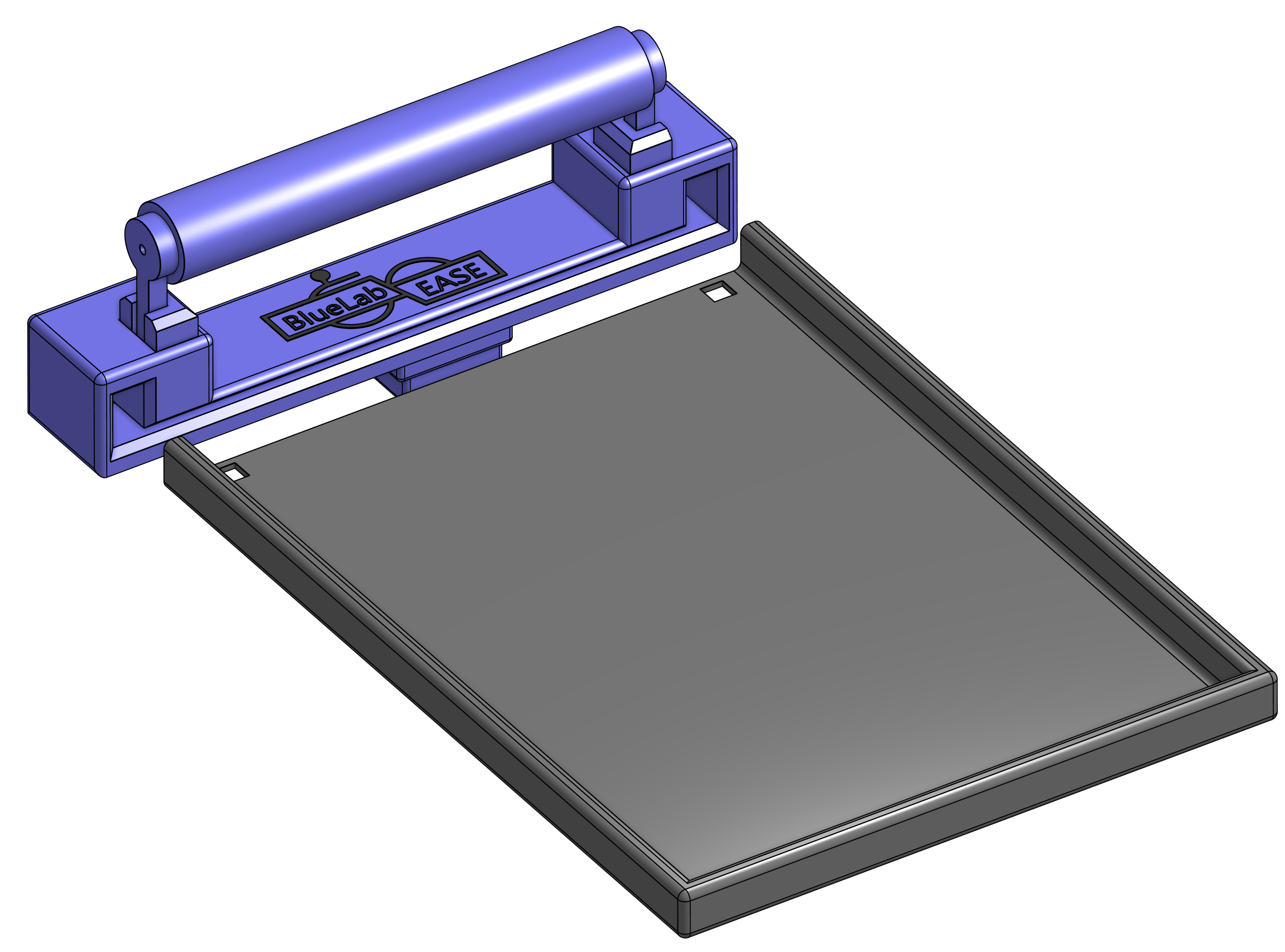
The first version used a pre-made plastic tray. I designed a spring-loaded clamping mechanism with locking pins so the tray could be removed for cleaning or moved out of the way.

Pulling the handle retracted the pins and released the tray. That mechanism became the defining feature of our first successful prototype.

05 / FIRST DELIVERYFROM PROTOTYPE TO REAL USE
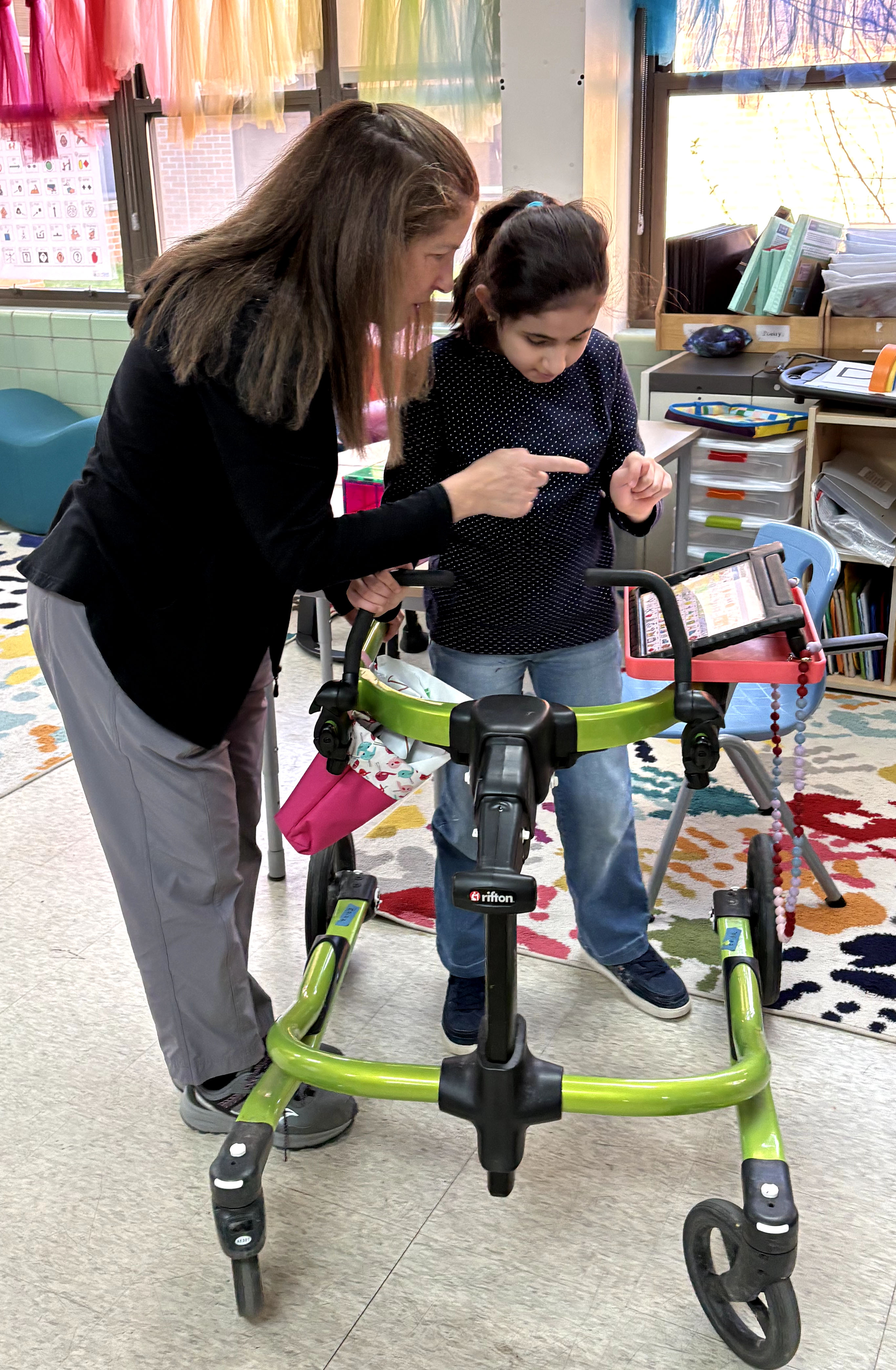
Physical therapist introducing the lunch tray holder to a student
PHYSICAL THERAPIST INTRODUCING THE DEVICE

THE MOMENT THAT MADE THE PROJECT REAL

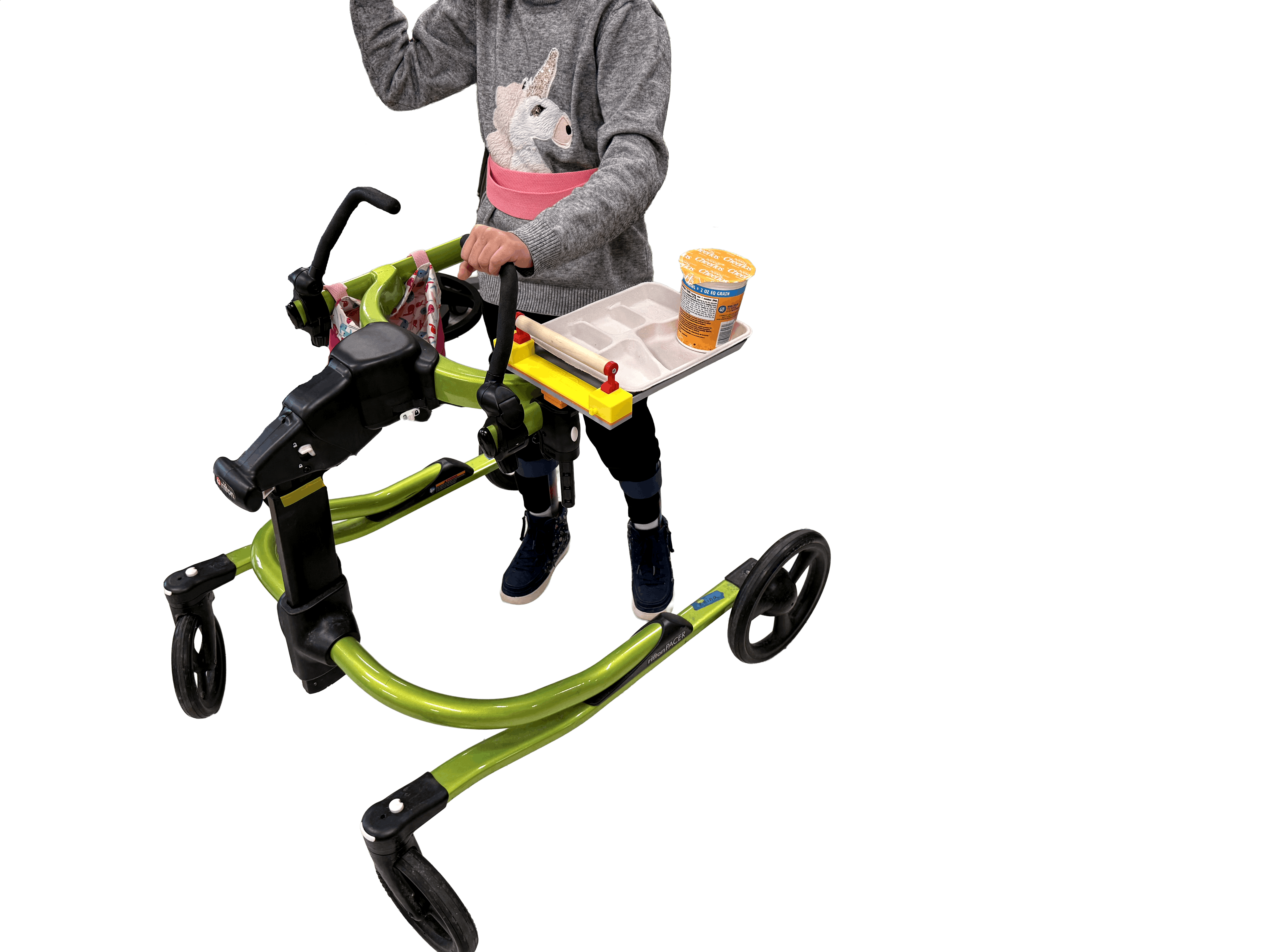
At the end of my freshman year, we delivered the prototype to the physical therapists and watched a student use it to get her lunch independently for the first time.

The student was non-verbal and used a communication tablet. After learning how to use the tray, she pressed the “favorite” button on her tablet.

Seeing a design move from CAD to a device that immediately gave someone more independence was one of the most rewarding experiences I've had as an engineer.

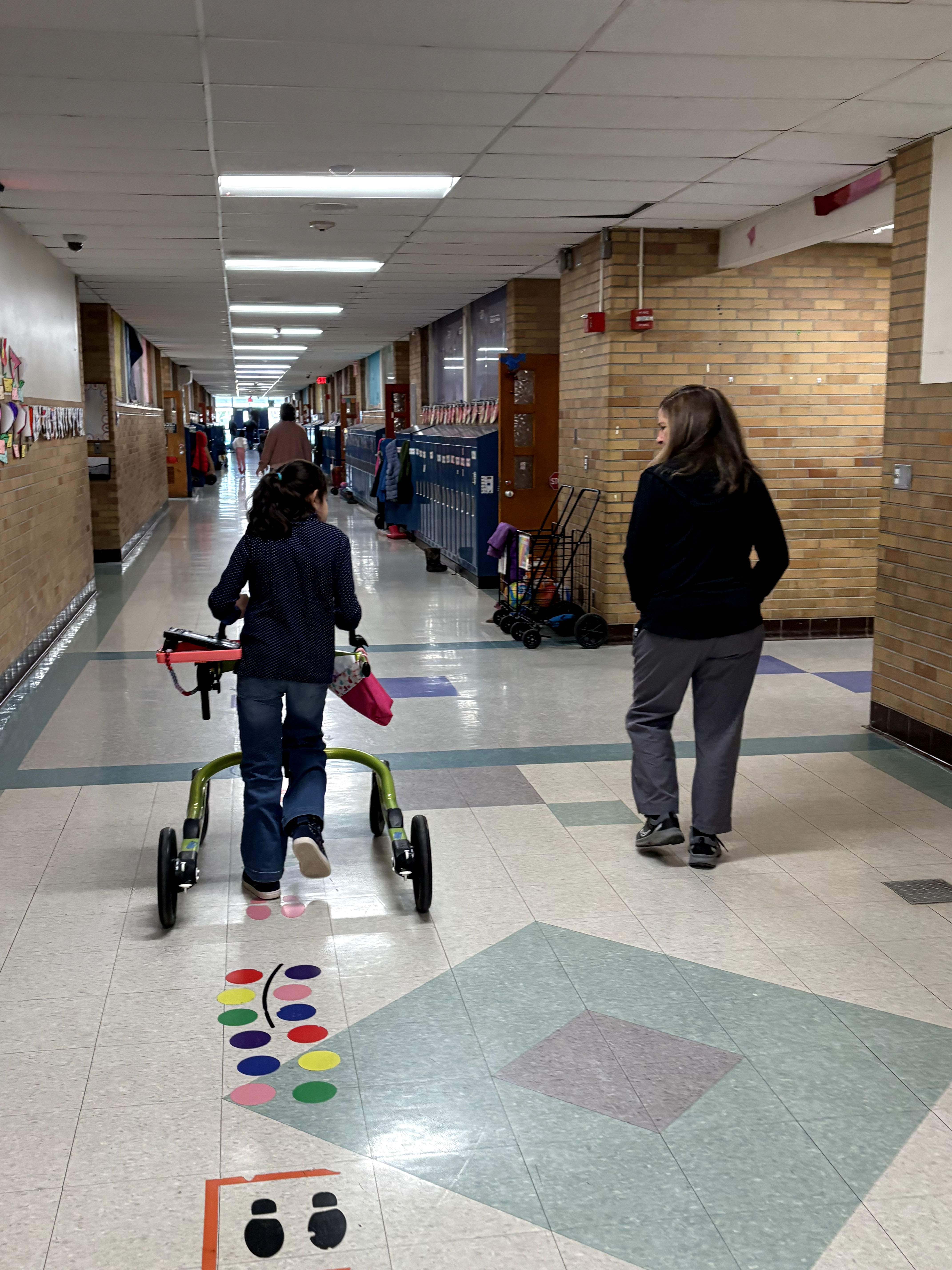
Student walking through a school hallway using the walker with the newest tray prototype attached
NEWEST PROTOTYPE / IN USE AT SCHOOL
06 / SECOND ITERATIONFEEDBACK → REDESIGN
01

SIMPLIFY THE INTERACTION

In practice, the tray did not need to be removed as often as expected, and the student could not independently use the spring-handle mechanism. We shifted focus away from removability and toward simplicity and stability.

02

STRENGTHEN THE MOUNT

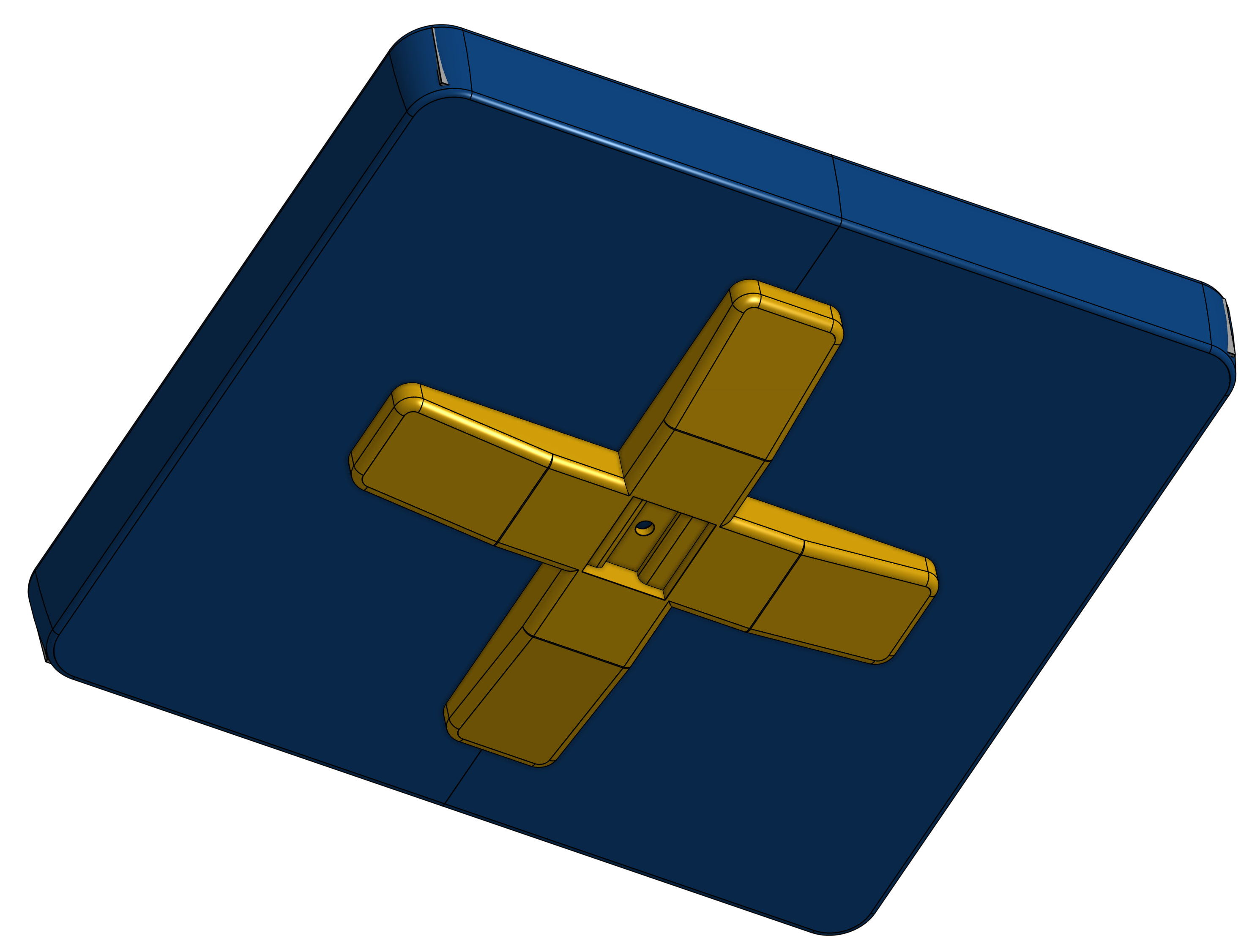
The mounting socket was redesigned to be more robust, replacing a 3D printed shaft with a metal screw while preserving the adjustability of the native walker clamp.

03

BUILD A BETTER TRAY

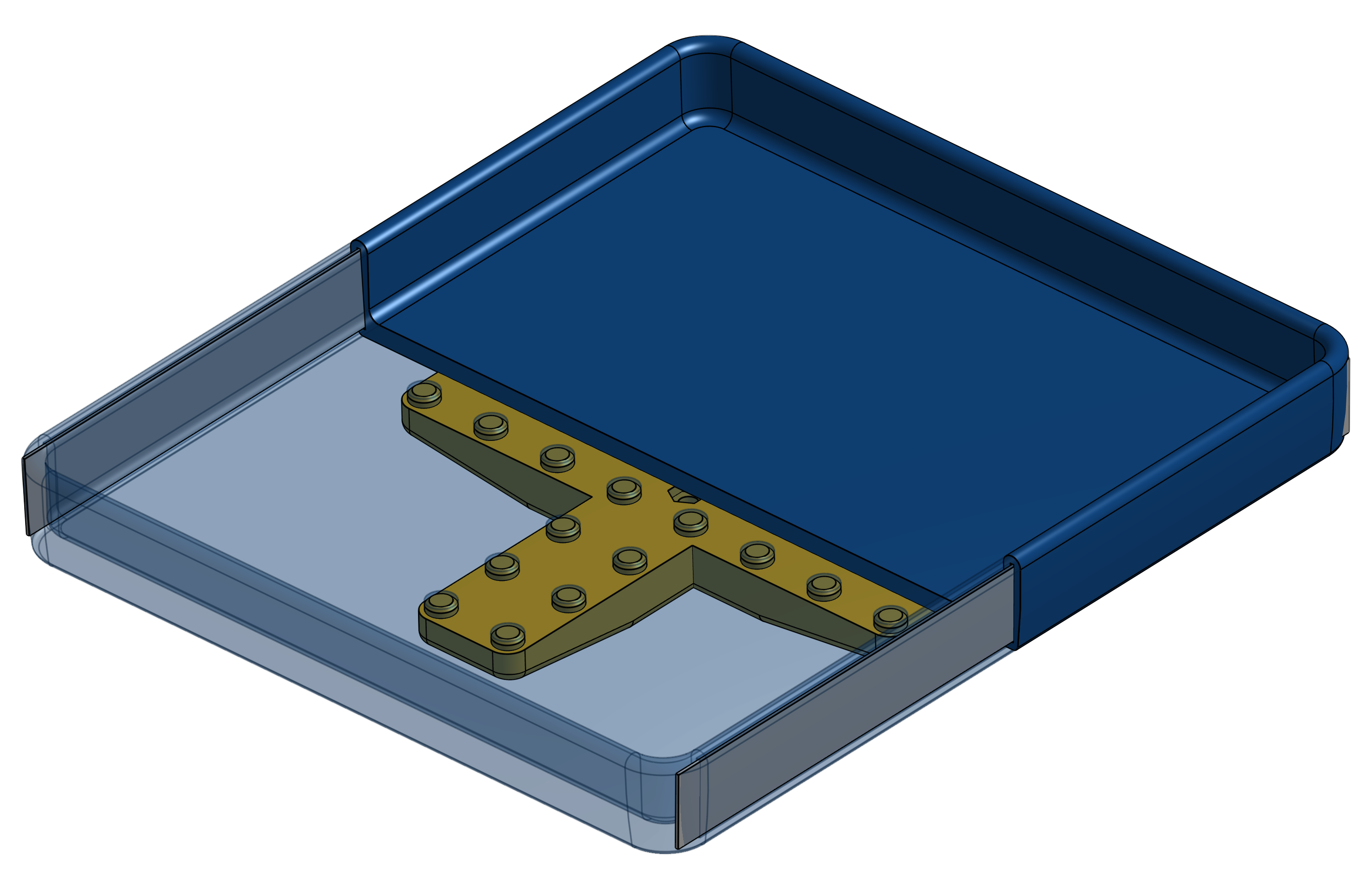
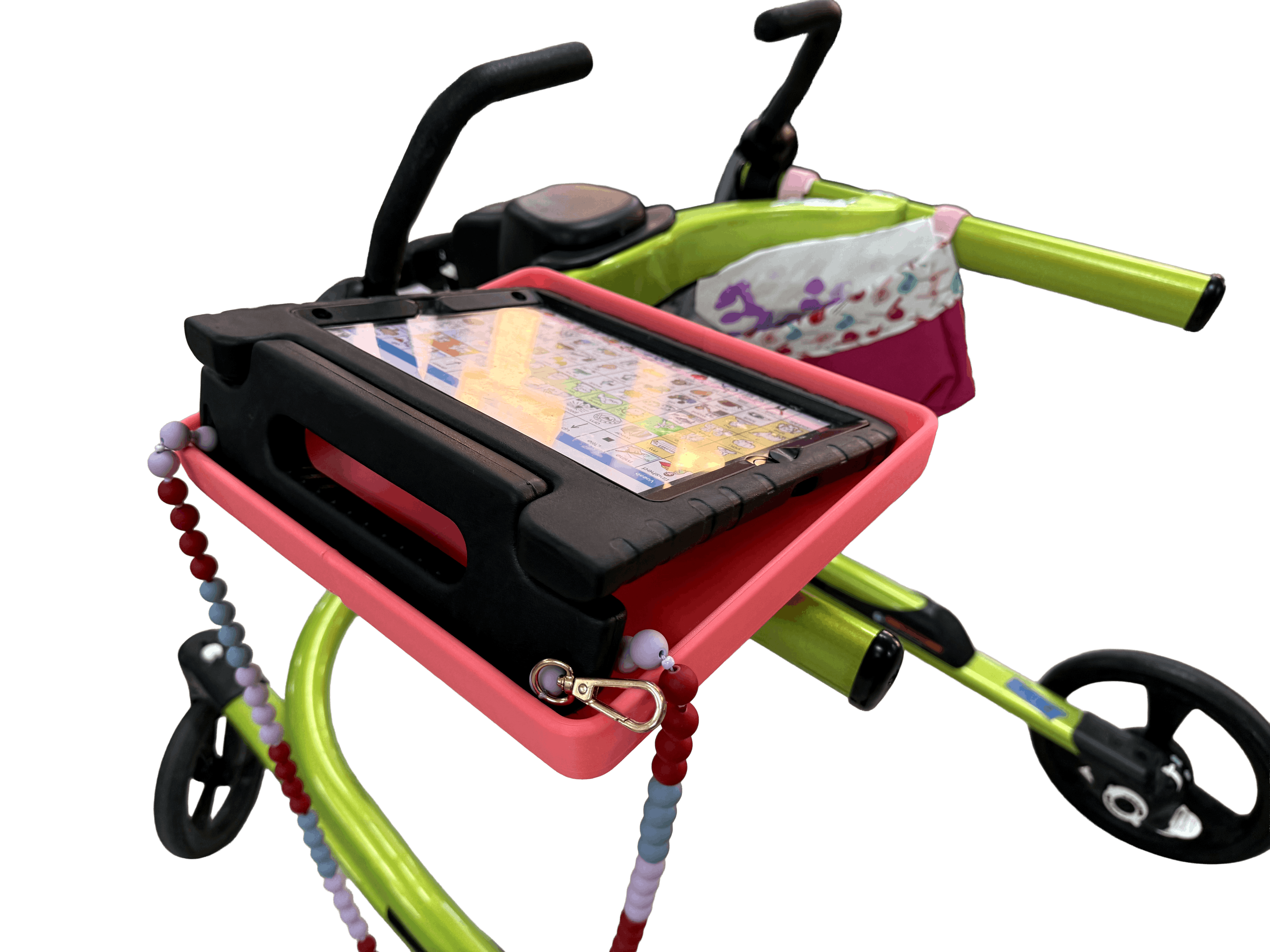
The original pre-made tray was too flexible for a heavy lunch or milk carton. We replaced it with a fully custom 3D printed tray that was larger, stiffer, and capable of also holding the student's communication tablet.

07 / CURRENT DESIGNCAD + MOUNTING SYSTEM
Isometric CAD rendering of the newest lunch tray holder prototype
NEWEST PROTOTYPE / ISOMETRIC ASSEMBLY
Bottom CAD view of the newest lunch tray holder showing the mounting socket
BOTTOM VIEW / REVISED MOUNTING SOCKET
Spring handle clamp prototype mounted on the walker
SPRING HANDLE CLAMP / PROTOTYPE ON WALKER
08 / TEAM & NEXT STEPSFINAL ITERATION IN PROGRESS
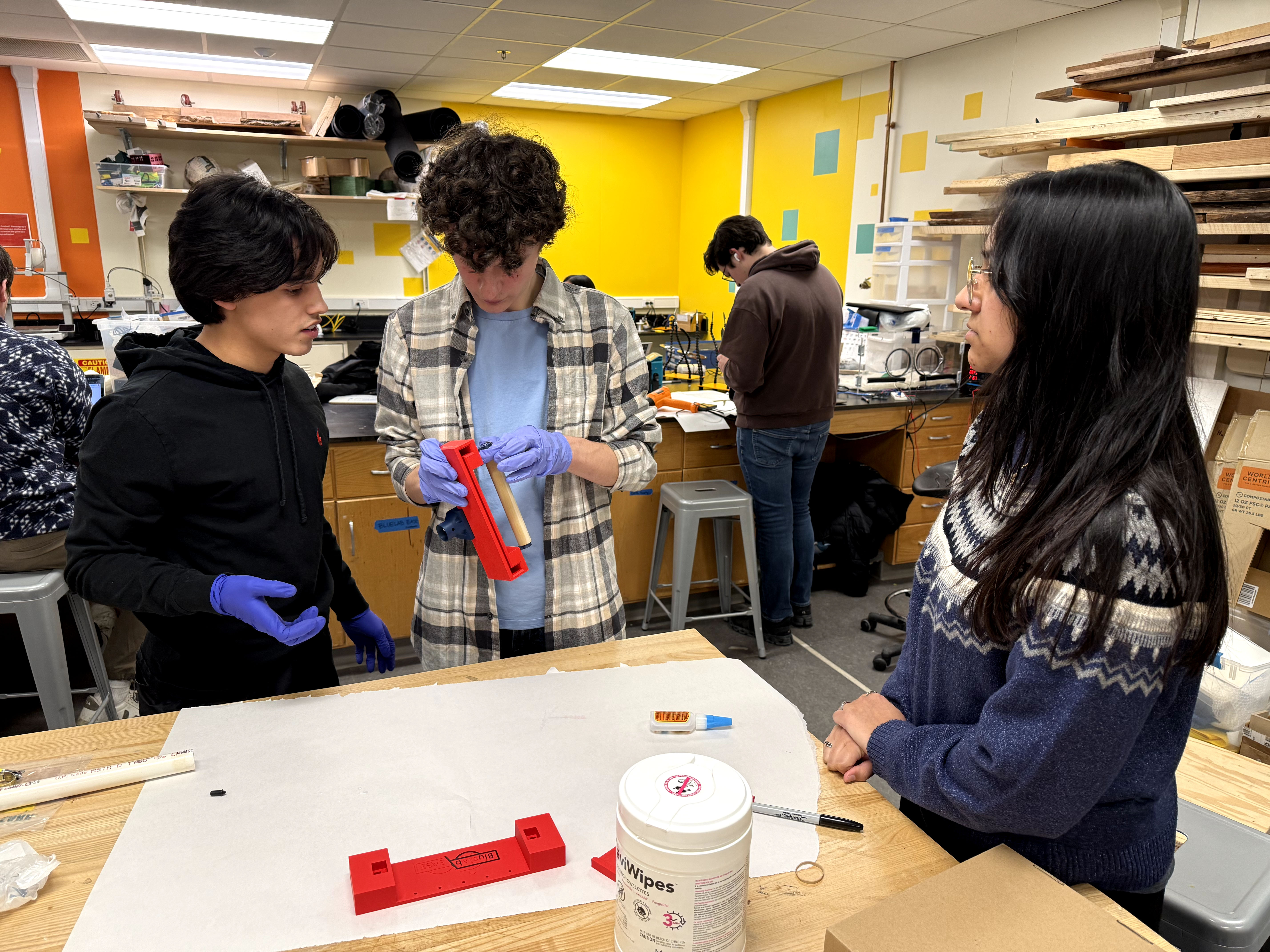
BLUElab EASE Ann Arbor team working together on the spring handle clamp prototype
ANN ARBOR SUBTEAM / BUILD SESSION

FROM ONE STUDENT TO MORE

At the end of my sophomore year, we delivered the redesigned prototype and received another round of positive feedback. This year, we are completing one final iteration focused primarily on improving the mounting system.

The Ann Arbor subteam is also growing significantly. Once the current design is finalized, our focus can expand toward distribution — getting the device to more students who could benefit from it — while also addressing additional needs identified by our physical-therapy partners.